How galaxies, dark matter and the first chemical elements shaped our Universe.
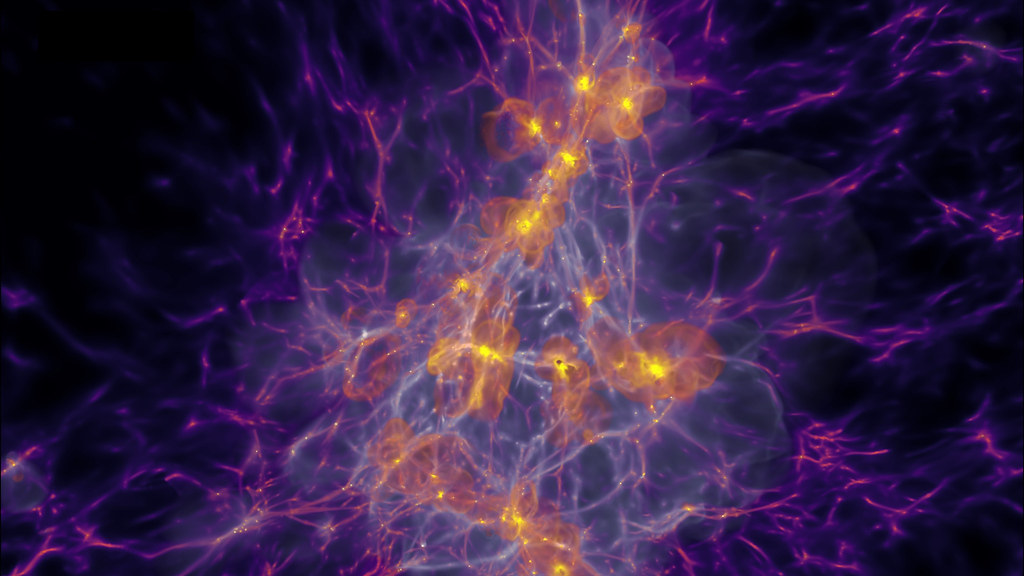
I am a computational astrophysicist and cosmologist, and Assistant Professor/Lecturer at the University of Bath. My group runs cosmological simulations, statistical modelling and observations to understand how galaxies form, what dark matter is made of, and how the earliest stars forged the chemical elements now written into the Milky Way and its smallest companions.

Four themes
The origin of the first chemical elements
How the first stars seeded the Universe with its first heavy elements.
Read moreDark matter and the smallest galaxies
Using the faintest dwarf galaxies as laboratories for the nature of dark matter.
Read moreGalactic archaeology and the Milky Way
Reading the fossil record of stars to reconstruct how our Galaxy formed.
Read moreComputational astrophysics, statistics & HPC
Turning simulations into controlled, statistical experiments on supercomputers.
Read moreA few papers that capture the programme
MEGATRON: how the first stars create an iron metallicity plateau in the smallest dwarf galaxies
Links chemical enrichment from the first (Population III) stars to elements we can measure in nearby ancient stars today.
Rey et al. 2025 (arXiv:2510.05232)
Boosting galactic outflows with enhanced resolution
Better-resolved outflows carry up to five times more mass and energy, reshaping how we model the regulation of galaxies.
Rey et al. 2024, MNRAS, 528, 5412
VINTERGATAN-GM: the imprints of early mergers on Milky-Way-mass galaxies
A new, controlled approach to Galactic archaeology, linking halo stars to the cosmological history of a Milky-Way-like galaxy.
Rey et al. 2023, MNRAS, 521, 995