Galaxy formation, from the first stars to the Milky Way
I use cosmological simulations to study how galaxies form, across four themes. Simulation movies for several of these projects are on my YouTube channel.
The origin of the first chemical elements
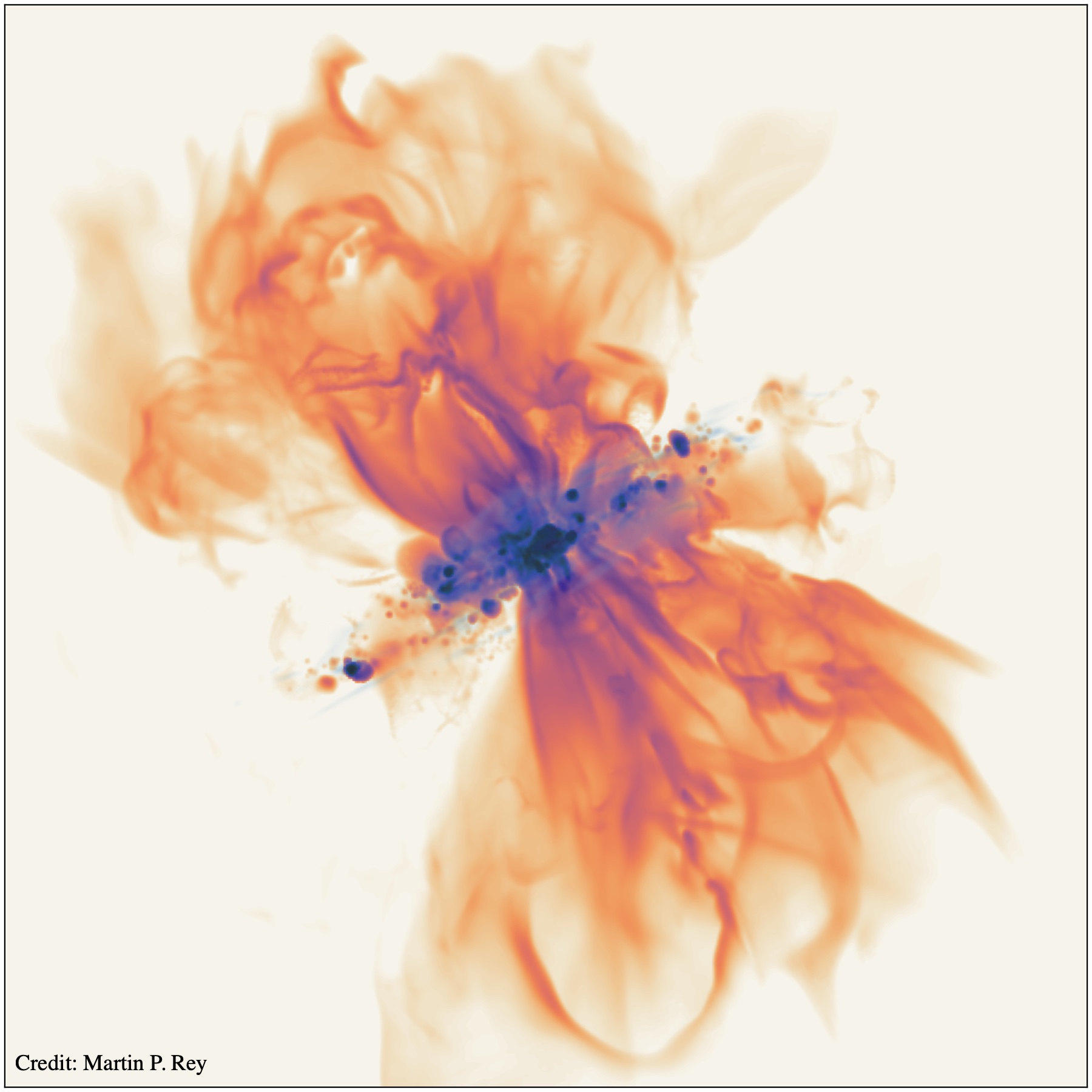
Every element heavier than helium was forged in stars. I study how that began: how the first generations of stars seeded the Universe with its first heavy elements, and how that signal reaches the smallest, oldest galaxies we can still observe.
- Rey et al. 2025 (MEGATRON): the first stars create an iron metallicity plateau in the smallest dwarf galaxies. arXiv
- Andersson, Rey et al. 2026 (EDGE-INFERNO): how chemical-enrichment assumptions shape the individual stars of an ultra-faint dwarf. (preprint forthcoming)
- Cameron, Katz, Rey & Saxena 2023: Unexpectedly high nitrogen content in a very early galaxy observed by JWST. MNRAS (2023)
Dark matter and the smallest galaxies
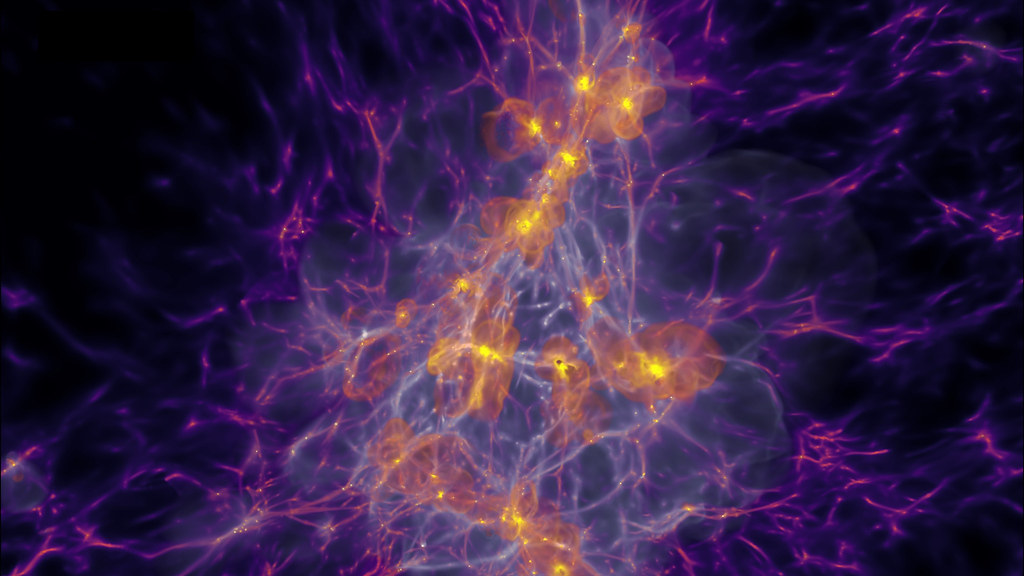
The faintest dwarf galaxies are dominated by dark matter, which makes them sharp tests of its nature. Through the international EDGE collaboration I use them to connect what we observe to the underlying dark matter and galaxy-formation physics.
- Rey et al. 2025 (EDGE): dwarf-galaxy scaling relations and the role of feedback. NASA ADS
- Rey et al. 2024 (EDGE): prospects to break dark-matter heating degeneracies with HI rotation in faint dwarfs.
- Rey et al. 2019 (EDGE): the origin of scatter in ultra-faint dwarf stellar masses and sizes. arXiv
- Press: Julio et al. 2025, “Decades-old dark matter debate narrows as the smallest galaxies reveal hidden forces at work”.
- Press: Taylor et al. 2025 (Nature): a new class of ancient star systems linking globular clusters and the smallest galaxies.
Galactic archaeology and the formation of the Milky Way
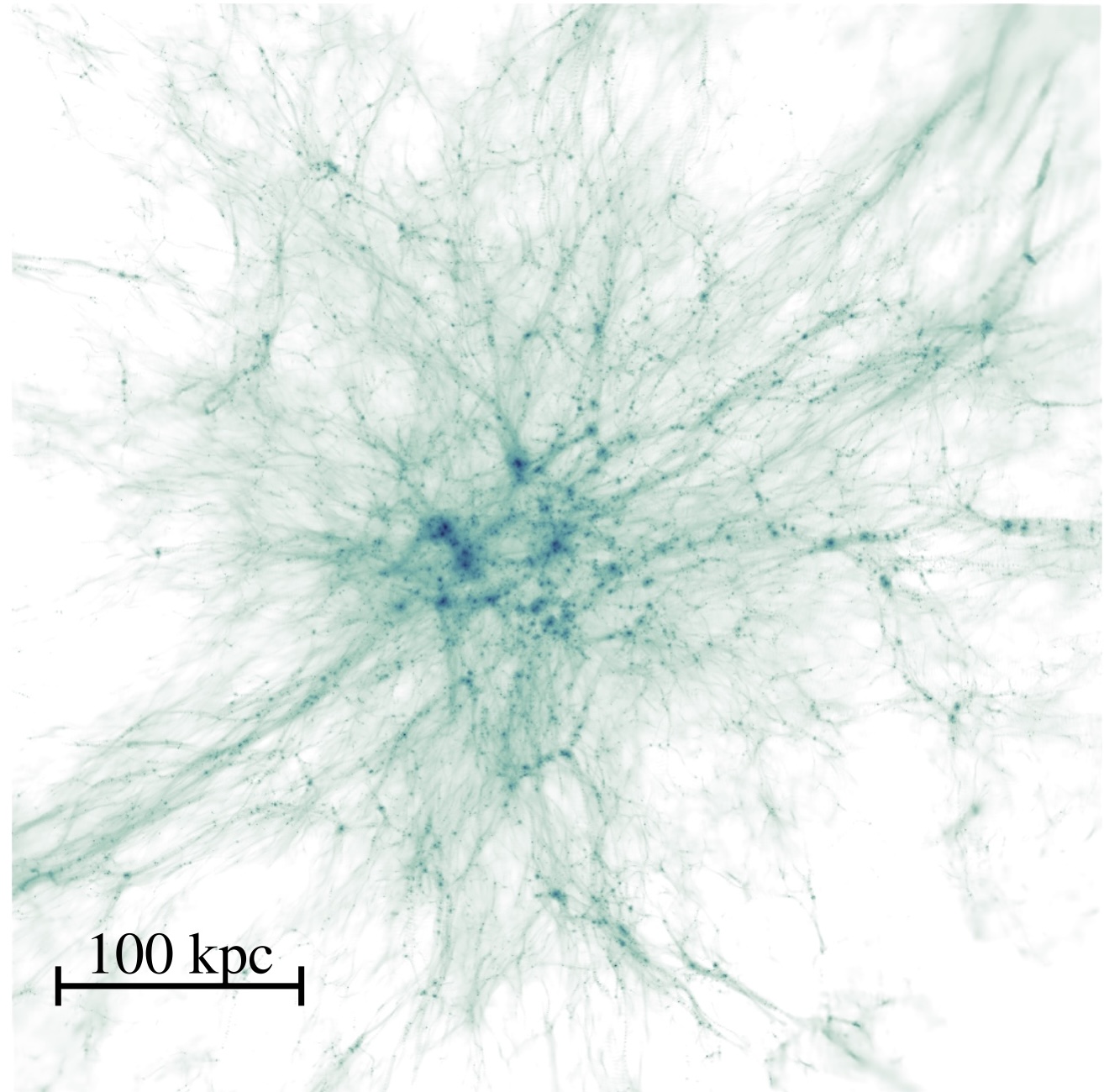
The Milky Way and its halo preserve a fossil record of how our Galaxy assembled from smaller, early galaxies. I pioneered a controlled approach to reading that record, linking the stars we see to the cosmological history that produced them.
- Rey et al. 2023 (VINTERGATAN-GM): a controlled approach to Galactic archaeology. arXiv
- Rey & Starkenburg 2022: how cosmological merger histories shape stellar haloes. arXiv
- Rodríguez-Cardoso et al. 2026 (VINTERGATAN-GM): a massive Gaia-Enceladus-like merger can produce the long-lived planes of satellite galaxies seen around the Milky Way. arXiv
Computational astrophysics, statistics & high-performance computing
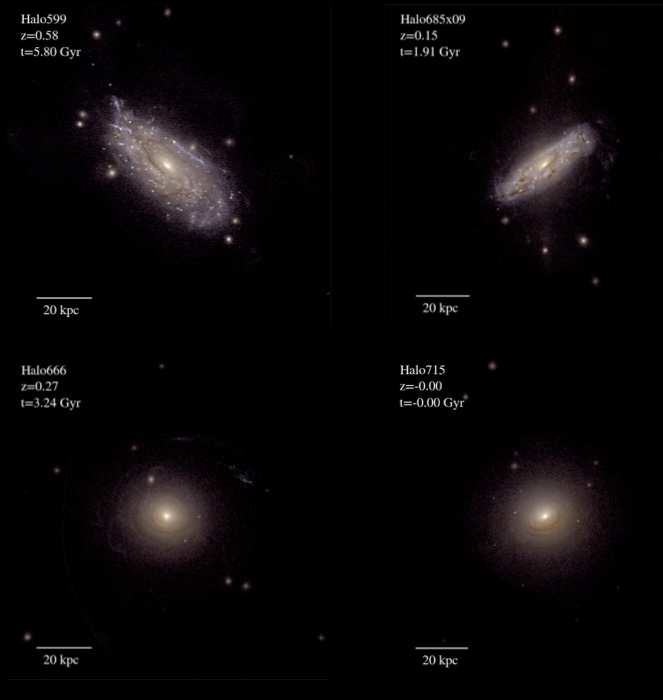
The common method behind the themes above is turning cosmological simulations into controlled, statistical experiments on supercomputers. I co-developed the “genetic modification” technique that makes this possible, and I contribute the open-source tools that implement it. As principal investigator, I have been awarded more than 67 million CPU hours to run these simulations.